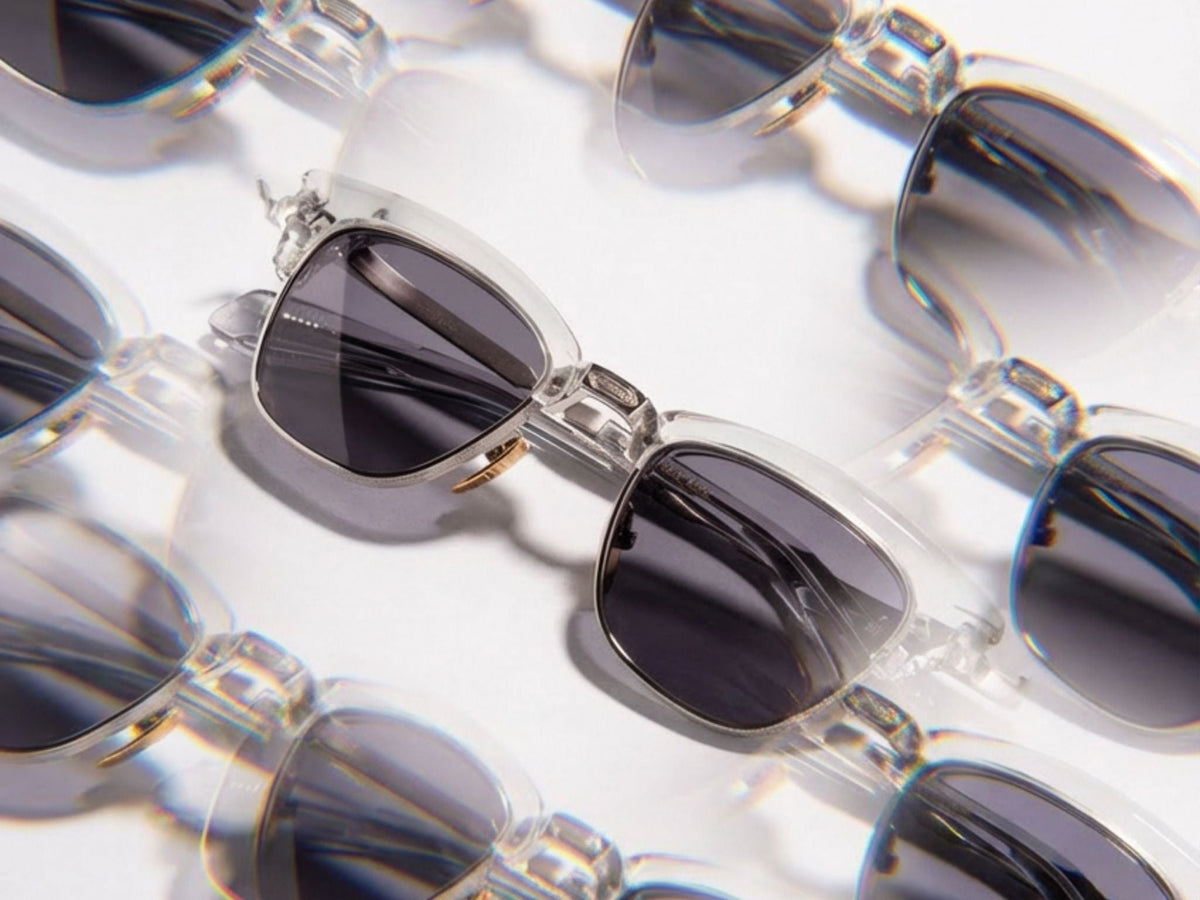
With their chunky brows and timeless wireframe design, the humble browline has been making people look really clever since right back in the 1940s. Perhaps one of the most recognisable shapes of the 20th century, they’re a true eyewear classic that somehow always manages to boost the IQ of whoever’s wearing ‘em. Here’s the story behind them...
Whereas most classic eyewear designs came from necessity, often starting out as safety specs for the military or motorsports, the browline is different, and as far as we can tell was always form over function. These were less about solving a problem, and more about the humble art of making something different.
The earliest browlines were designed by a chap named Jack Rohrbach in 1947. At this time brands were throwing a lot of ideas at the wall to see what would stick. Glasses were now covetable symbols of status, and brands were constantly looking for a point-of-difference that would help them stand out from the pack. For Rohrbach’s creation, known as the Shuron Ronsir, that point-of-difference was a customisable design—with interchangeable brows and bridges allowing the wearer to put their own spin on the design.
This unique selling point quickly helped the Ronsir become a bestseller—and it wasn’t long before other brands got in on the act, each throwing in a few of their own ingredients into the mix. Some used square lenses, some used faux-wood brows and some opted for full aluminum frames for a sleeker, lighter look—but the winning combination of heavy brows and sleek wireframes remained.
According to something we just read on the internet, browlines accounted for over half of glasses sold in the US during the 1950s, and while we haven’t got access to the figures to confirm that pretty wild statement—looking through old photos from the ‘50s they did seem to be everywhere, and were worn by everyone from Colonel Sanders to Malcolm X.
Which brings us to a bit of an eyewear ‘chicken and egg’ scenario. Did browlines make people look clever, or did smart people wearing ‘em add to their intellectual cache? Either way, browlines soon became shorthand for pen-pushing businessmen who rode the train into the city from the suburbs each morning for a long day behind a desk.
While this aesthetic was aspirational to some, it also played a part in their initial downfall, and by the late 1960s the counterculture explosion meant the idea of rising the corporate ranks was strictly for squares. But not for long...
If you ever want a real life example of the cycles of fashion, then the browline is the perfect case study, endlessly fading in and out of the limelight as times and tastes change. The long–haired ‘n’ laid-back hippy movement might have budged them from centre stage towards the end of the ‘60s, but by the ‘80s they were firmly back in the picture.
The hippy dream was over, disco was dying and it was time to go back to work. Looking back to go forward, the yuppies raided the Ivy League wardrobes of the ‘50s and ‘60s for their new go-getting uniform of polo shirts, khaki slacks and… you guessed it, browline specs. While in 1977 Shuron just sold 5,000 pairs of their classic style, a decade later they’d shifted over half a million—surely helped in part by Bruce Willis’s role as browlines-wearing detective David Addison in the hit TV show, Moonlighting.
When talking about browlines in the 80s, we should probably mention the lesser-spotted ‘monobrowline’ style too. The name kind of speaks for itself with these—swapping the browline’s defined brows for a single bold bridge which spanned the full width of the frame. A decidedly niche option in the 60s, they had a serious resurgence in the 80s thanks to Ray-Ban and their ‘Wayfarer Max’ design which sat somewhere between the classic Wayfarer and the Clubmaster browline frames.
But what goes up must seemingly come down—and once again the browline rollercoaster took a momentary plunge. Bruce’s Moonlighting browlines might have made him the poster-boy for casual ‘80s cool, but by 1993’s Falling Down the same specs were used as a symbol of the crumbling of the American dream as a pent-up defence worker played by Michael Douglas boiled over on the streets of Los Angeles.
Which brings us to the big question… where are we at on the browline graph right now? Well, thanks to clever wardrobe decisions on shows like Mad Men, the internet's democratic flattening of decades and the modern age’s fascination with vintage style, it’s a good time for browlines. There’s a fair few to choose from too.
For those looking to keep things trad, the Jacques Marie Mage Sartre and Alin Sun have that classic ‘50s browline flavour—with hefty sculptural brows and those particularly ornate engraved temples. You can still get that browline feeling with acetate and a clever design. Brands like Kuboraum have brought the browline right up to date—with frames like the K36, the K5 and the J5 using thick acetate to make a new interpretation of the time-honoured shape.

Brazilian brand Lapima are also dab hands at modern browlines, with their Joaquim and Tessa shapes stripping things right back with chunky one-piece frames and some of the biggest brows around. The design might have evolved a bit since the ‘40s, but that studious silhouette is still present and correct. They still make you look really clever too.
See our favourite browline glasses and sunglasses here.


